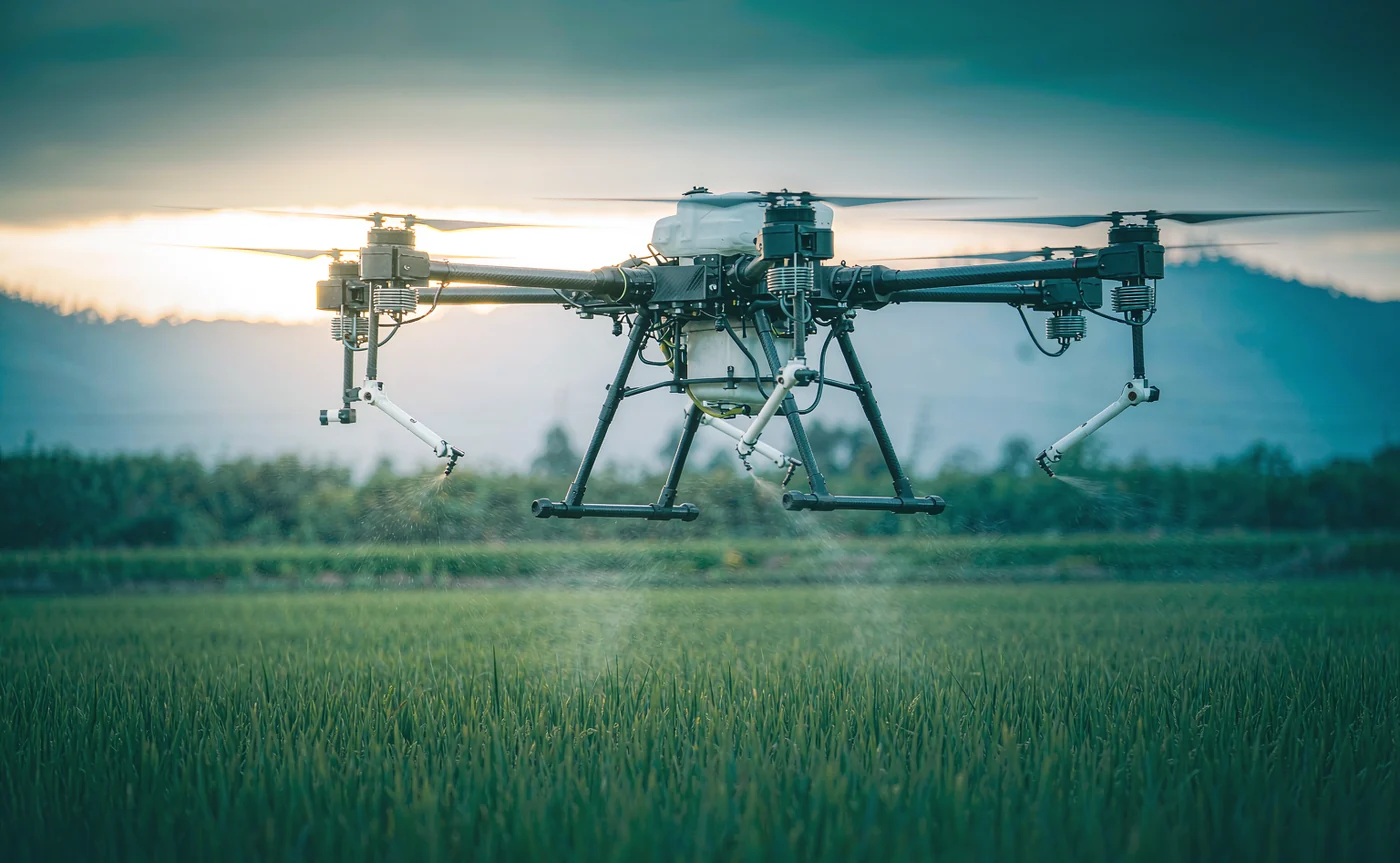
A sprayer, a survey aircraft and a delivery platform all ask different things of a motor. Below is how we configure each one — and the numbers we hold ourselves to.
A 30 L sprayer lifts 12.6 kg per rotor at take-off, then runs eight hours a day through pesticide mist and wash-down. We specify IPX6 stator coating, triple-lip bearings and a thrust margin of at least 25 % above hover.
Vibration, not thrust, is the limiting factor for survey work. Our cinema-grade rotors balance to under 0.8 mm/s, and we supply silicone-damped mounts so the gimbal does not have to compensate for the airframe.
Delivery platforms are judged on uptime. Our controllers stream per-phase current, MOSFET temperature and fault history over CAN, so a fleet operator can replace a part before it fails rather than after.
Cinema pilots do not need the last gram of thrust — they need repeatability. Sensorless FOC with online identification flattens the low-throttle response so a 5 % stick input produces a predictable 5 % change.
Lawn mowers, delivery rovers and patrol robots share one enemy: water and grass. Our hub and joint motors are IP67 sealed, run 55 N·m peak, and speak CAN so the navigation stack can read wheel torque directly.
From 500 pieces we change KV, winding scheme, shaft, connector, cable length and silkscreen. Tooling is amortised into the unit price, and we sign an NDA before the first drawing.
All-up weight, arm length, battery, target flight time, field conditions — that is enough for a first proposal.